
Beware of Scams
The publishing world is full of opportunities, but it's also rife with scams targeting authors at all levels. Here's how to spot and avoid them.

The publishing world is full of opportunities, but unfortunately, it's also rife with scams targeting authors at all levels. Whether you're self-publishing, seeking publication with an indie publisher, or navigating the traditional route, understanding how to identify and avoid scams is a must.
The hardest part of writing this post was staying cool-headed and keeping it informative rather than full of anger. Scammers make many millions of dollars from hopeful authors every year. Not only does it steal money from creative people like us, it is demoralizing and can squelch our desire to write.
(None of the links seen here are sponsored.)
This is perhaps the best video on the emotional and financial toll scammers can have on authors. I highly recommend a watch: a very personal author story.
THE WHY
It is often unclear why someone would go through the effort of scamming authors. In general, we aren't a rich demographic. Most scams target early-career authors, so our manuscripts aren't worth a ton of money. It would make sense to shake down J.K. Rowling or Margaret Atwood, but the small fish like me?
The answer is that many authors are desperate to see their masterpieces succeed. Some will pay a little. Others will pay a lot. Sometimes, they boil the frog slowly, adding up fees over time.
THE SCAMS
Authors, who often manage the entire publishing process themselves, are frequent targets due to their hands-on approach and willingness to invest in their books. Common scams include:
Bogus Marketing Services: For example, services like Author Solutions have been accused of charging exorbitant fees for ineffective or non-existent marketing.
Fake Publishing Platforms: Fraudulent sites offering distribution but disappearing after collecting fees. Always verify the legitimacy of lesser-known platforms.
Predatory Vanity Presses: Companies like Page Publishing have faced criticism for charging authors thousands for services that reputable publishers offer for free or at minimal cost.
Paid Reviews Scams: Services offering paid reviews violate the terms of platforms like Amazon, which can lead to account suspensions.
Example: Kirkus may be a book review scam, as suggested here.
Editing/Formatting Frauds: Freelancers on platforms like X, Facebook, and Fiverr may promise professional editing services but deliver low-quality work. Always vet freelancers through reviews and sample work.
Social Media Scams: Direct messages promising features on "bestseller lists" for a fee. For example, scammers on Instagram frequently promise "Top 100" placement in fake anthologies.
Fake Agents: Scammers pose as agents and ask for upfront reading fees, which no legitimate agent would do. For example, The TWS Literary Agency was exposed as a scam.
Influential People: Some of them will build deep fake identities of influential people to lure you in.
Award Scams: Some awards like the Purple Dragonfly Award charge hefty entry fees but offer no real prestige or marketing benefits.
Copyright Theft: Fraudsters may ask for full manuscripts to "review" and then steal or plagiarize your work. This is especially common with unsolicited emails from fake publishing companies.
Writing Coaches: There are a lot of legit writing coaches, but there are even more scammers who provide bad advice and do nothing to help you progress. Here's a post on spotting bad coaches.
Pay Before Delivery: If they won't give you a finished product before you pay, back out. If you use Fiverr, do not approve completion until you have the finished product. Report scams and give 1-star reviews.
Remember: Scammers prey on our insecurities and hopes. It is natural to be drawn in by them. Authors are more prone to scams because of how attached we are to our work.
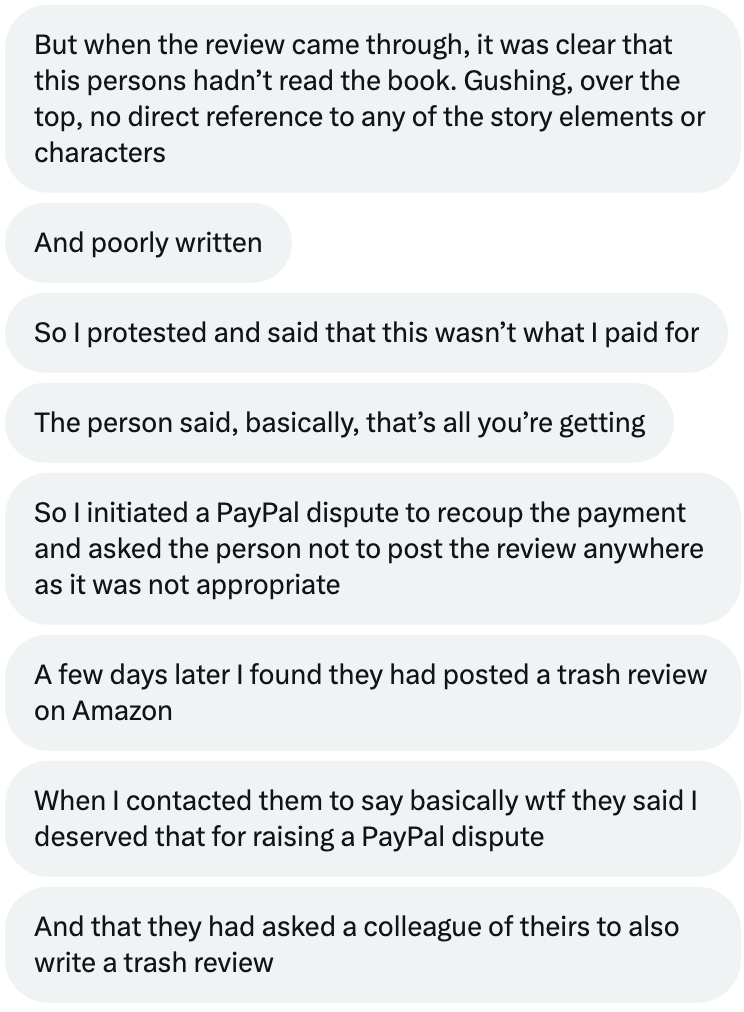
Example: A backfiring paid review. Don't get involved. If you do, document everything. (Anonymous, X)
SPOTTING SCAMS
There are plenty of red flags to look for before engaging anyone online:
Too Good to Be True: Be wary of services that promise overnight success or guaranteed results. There are no guarantees in publishing.
Upfront Fees: Reputable agents and publishers earn a commission from sales, not upfront payments. This is a sure sign you're being hustled.
Displayed Costs: More reputable providers display costs upfront on their websites. Less reputable ones won't, so they can get you talking privately.
Personal Email: They may be scammers if they email from a personal account (Gmail or, worse, Yahoo) rather than a professional one.
Pressure Tactics: Scammers often pressure you to act quickly. Take your time and verify credibility before signing on.
Tickets: Some scammers request that authors pay for tickets (and/or travel) in exchange for promoting your book at an event.
High ISBN Prices: These scammers charge hefty prices for ISBNs. See this easy how-to on ISBNs (no ads, no services offered).
Negging: Many scammers will tell you your book or cover isn't good enough, then offer to help you fix it. Don't fall for it.
Lack of Transparency: A legitimate service provides clear terms and a proven track record.
Community: The author community is amazing. Make friends. Rely on us to help you vet services.
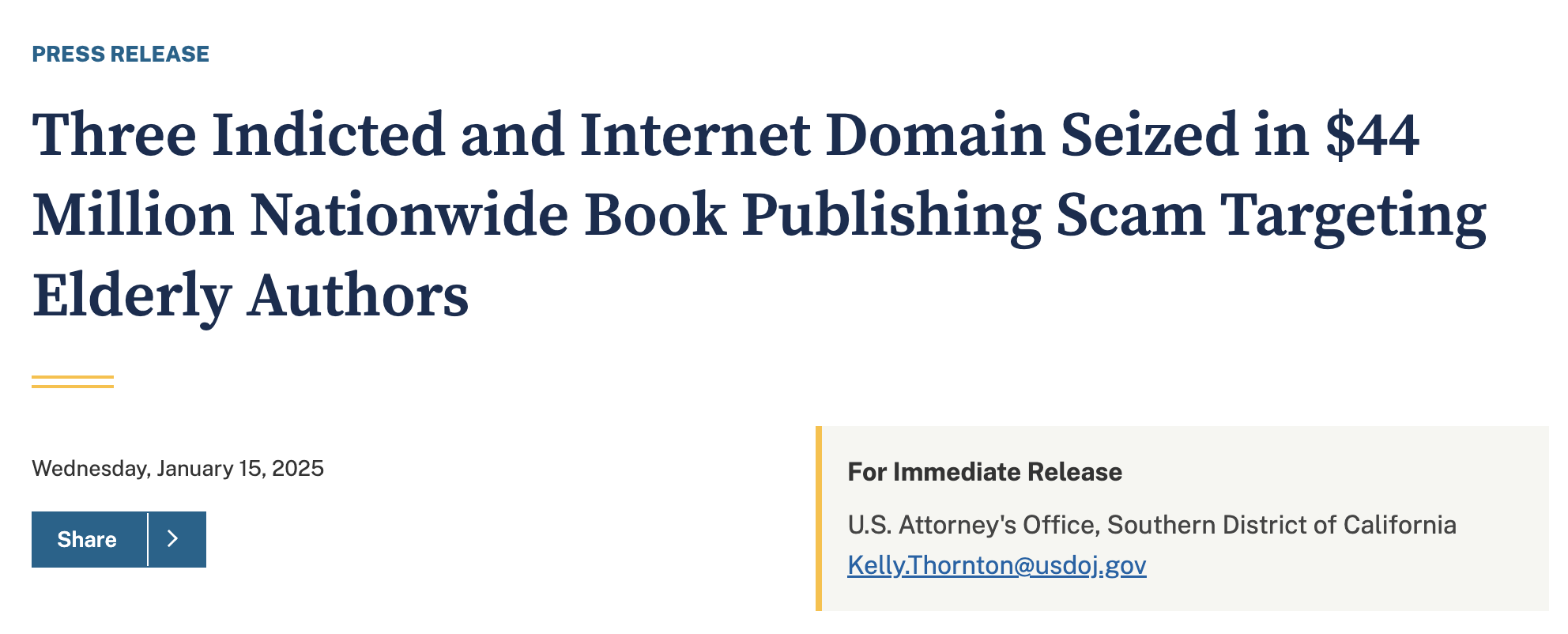
Sophisticated author scams fleece authors of millions.
DO YOUR RESEARCH
Check Reviews: Make sure services have reliable, independent testimonials. Many services fake their reviews.
Verify Credentials: Research providers on platforms like Writer Beware or Editors and Predators.
Ask for Samples: If hiring an editor or designer, ask for a portfolio or sample work.
Ask Other Authors: Plenty of authors are happy to help you figure out if a service is a scam.
Suggestion: Find trustworthy author friends by engaging authors who follow fewer people than follow them. They're selective and practiced at weeding out the bad ones.
SOCIAL MEDIA SCAMS
Avoid Direct Messages: Scammers often reach out via DM on X, Facebook, Threads, and every platform. By chatting in DMs, they can prey on your hopes and dreams without other authors calling out their BS.
Hint: Block anyone who direct messages you without engaging you in meaningful conversation first.
AI Bots: Bots are getting more sophisticated, crafting convincing fake messages using all the tactics human scammers use.
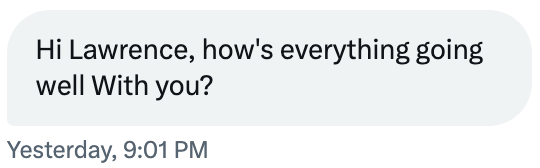
Example starter. Their goal: get you talking alone. (From Bluesky)
New Profiles: Check if the profile is new. Scammers often need new profiles because other authors out them.
Too Few Posts: If they only repost others' work, they're likely a bot. It's harder to train bots to post original content.
Too Few Followers: If a profile follows far more people than follow them, it's a red flag.
Hint: Go to the author/agent/publisher's website and follow their social links. If the accounts don't match up, it's a scam.
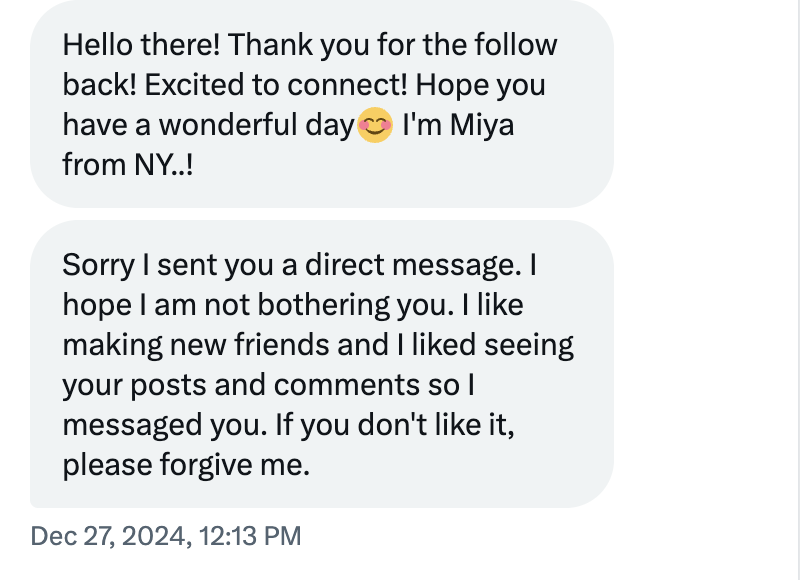
Example: An effective DM opener. Their goal: gain your trust. This one apologized for contacting me on X.
PROTECT YOUR WORK
Losing rights to your own work is a serious slap in the face. There are legal and illegal ways scammers may accomplish this.
Disreputable Presses: If you sign your book's copyright over to a press, they pretty much own the manuscript. Keep your copyrights.
Copyright Your Manuscript: Always register your copyright so nobody else can claim it.
FYI: Copyright your work in your own country. In the US you can find it here.
Careful With Sharing: Share manuscripts only with friends, a writer's circle, vetted readers, and professionals.
Note: It can take a long time to prove a manuscript was plagiarized, especially if they use AI to tweak your sentences.
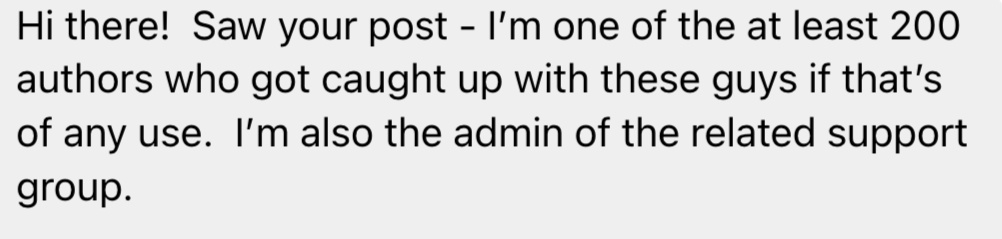
A threat to take all rights: "...you have made several threats to publish false and defamatory comments... If you do... you will lose all rights to your book, and you will also be sued." (Facebook. Writer Beware.)
WARN OTHER AUTHORS
Post Warnings: Use social media or blogs to share details of scams you've encountered. The community will rally behind you.
Fact: You are not alone. Plenty of authors have fallen for scams. Commiserating helps.
One-Star Ratings: If you hire a scam service on Fiverr or a book cover site, leave one-star reviews.
Contact Platform: Let platforms like Fiverr know about the scams.
Support Watchdogs: Follow groups like Writer Beware and the Alliance of Independent Authors (ALLi). The Better Business Bureau investigates complaints.
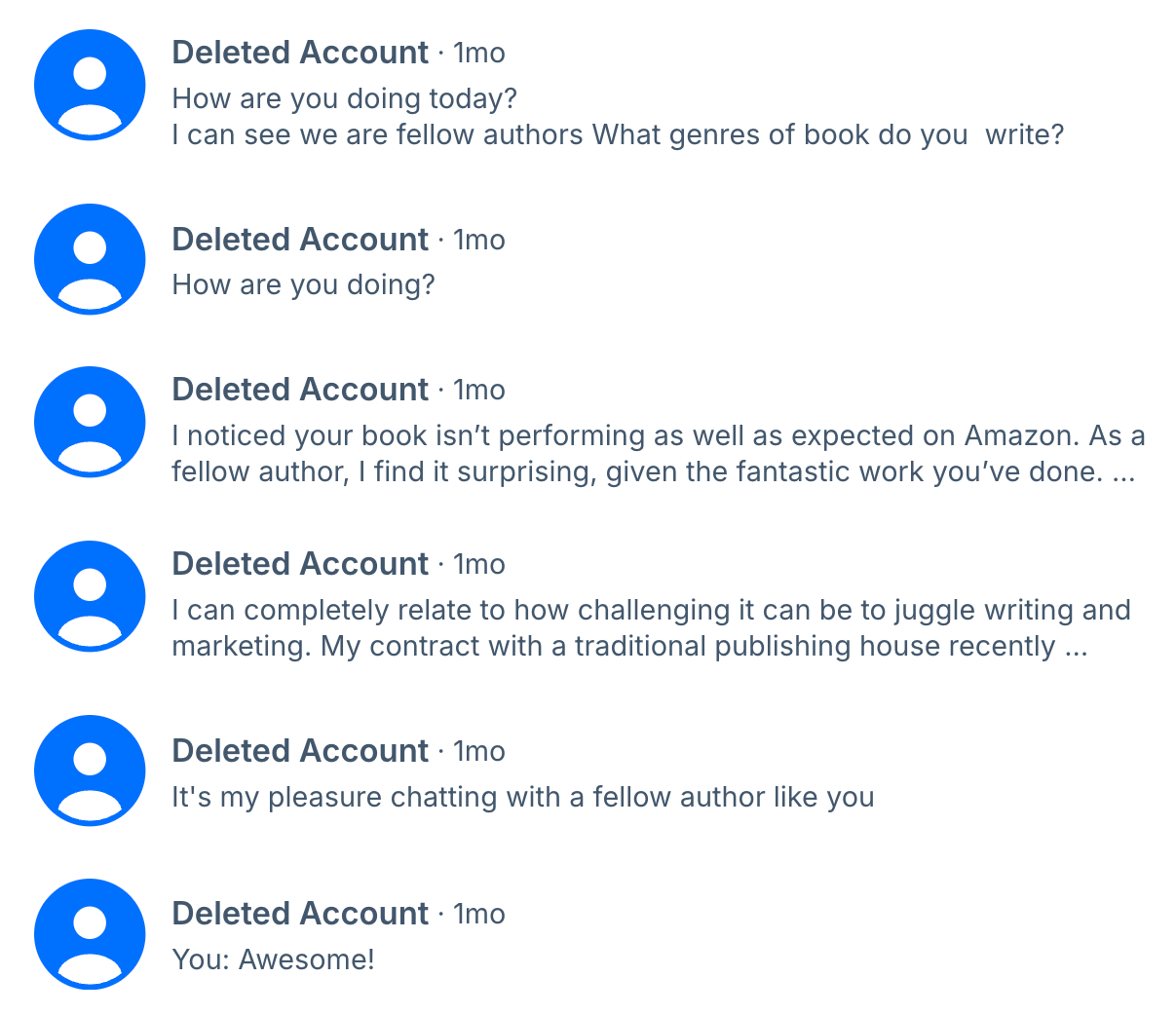
Most DMs are scams. These DM accounts are often deleted on Bluesky.
FINAL THOUGHTS
Scammers are becoming increasingly sophisticated, especially with AI bots that generate convincing interactions. By staying informed, vigilant, and proactive, you can protect yourself and your work. Most importantly, remember the strength of the writing community — when authors look out for each other, we can collectively reduce the impact of these bad actors.
Stay safe, share your experiences, and help make the publishing world a scam-free zone for all authors.
IN THE NEWS
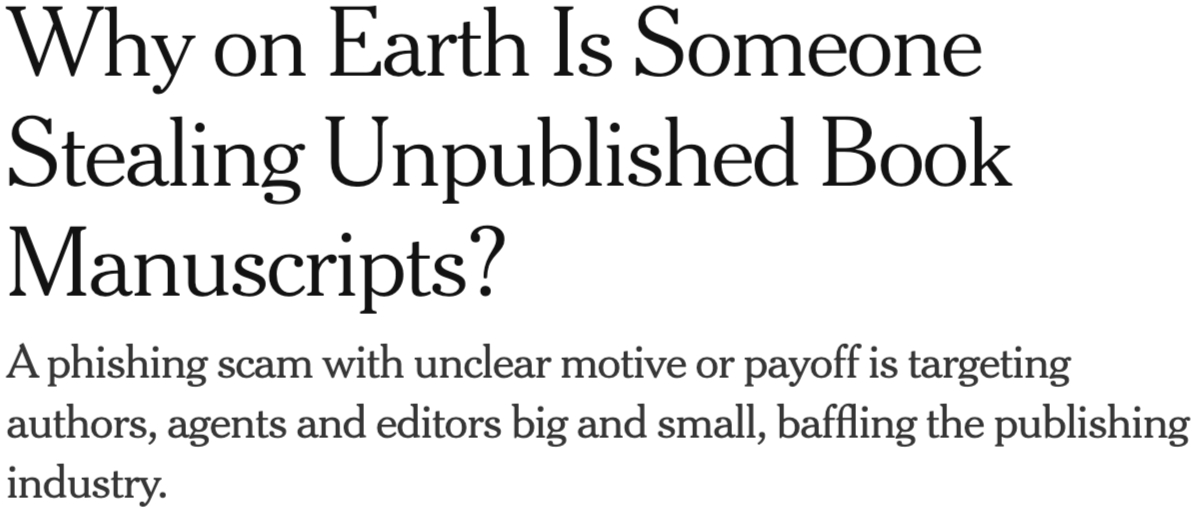
An interesting read in The New York Times.
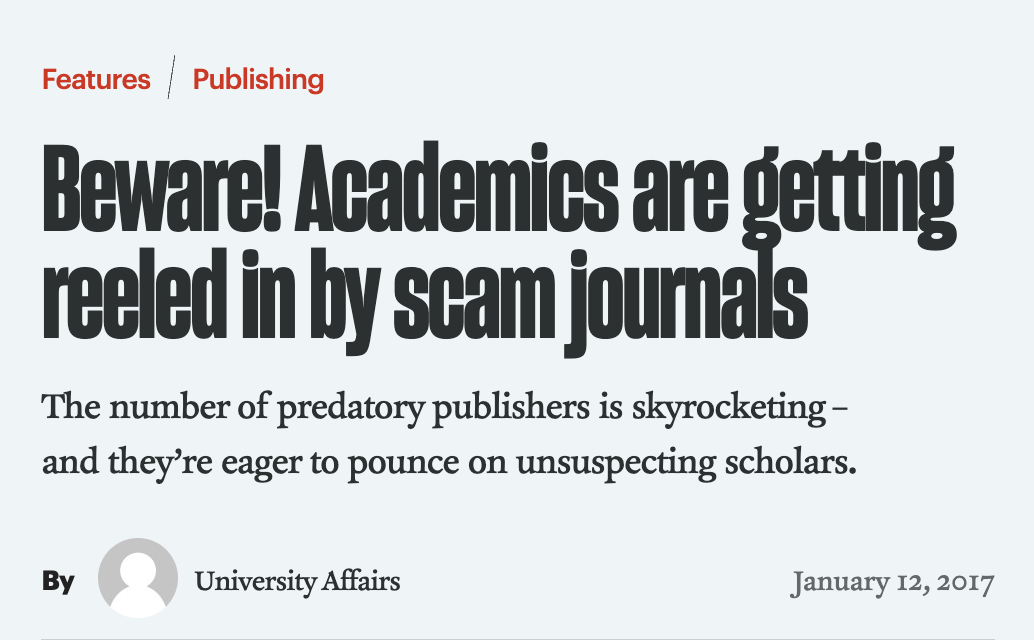
No genre is immune to scams (University Affairs).
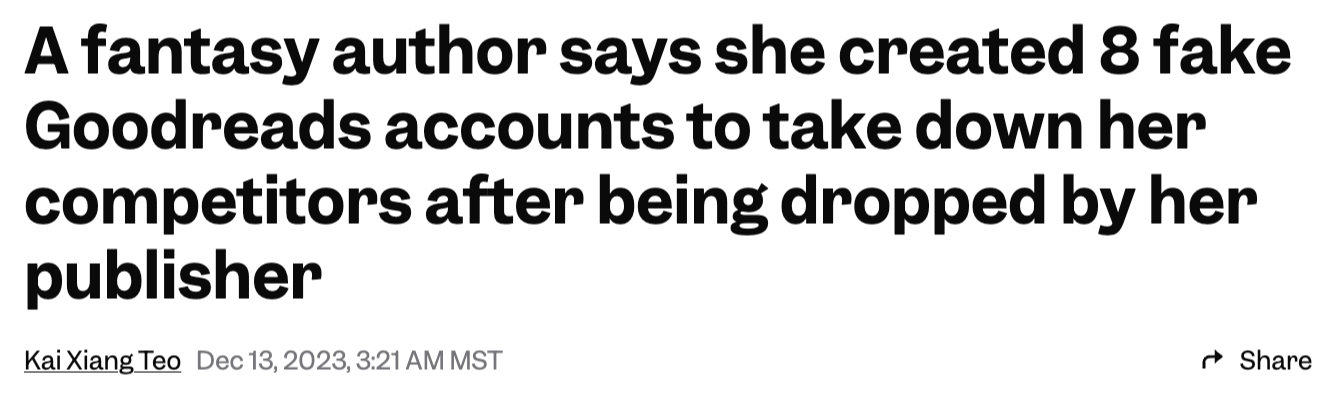
Authors may try to tank their "competition's" books — look into systematic negative reviews (Business Insider).
SHARED BY COMMUNITY
The following are examples of scams, warnings, and feedback brought to my attention while researching this post.
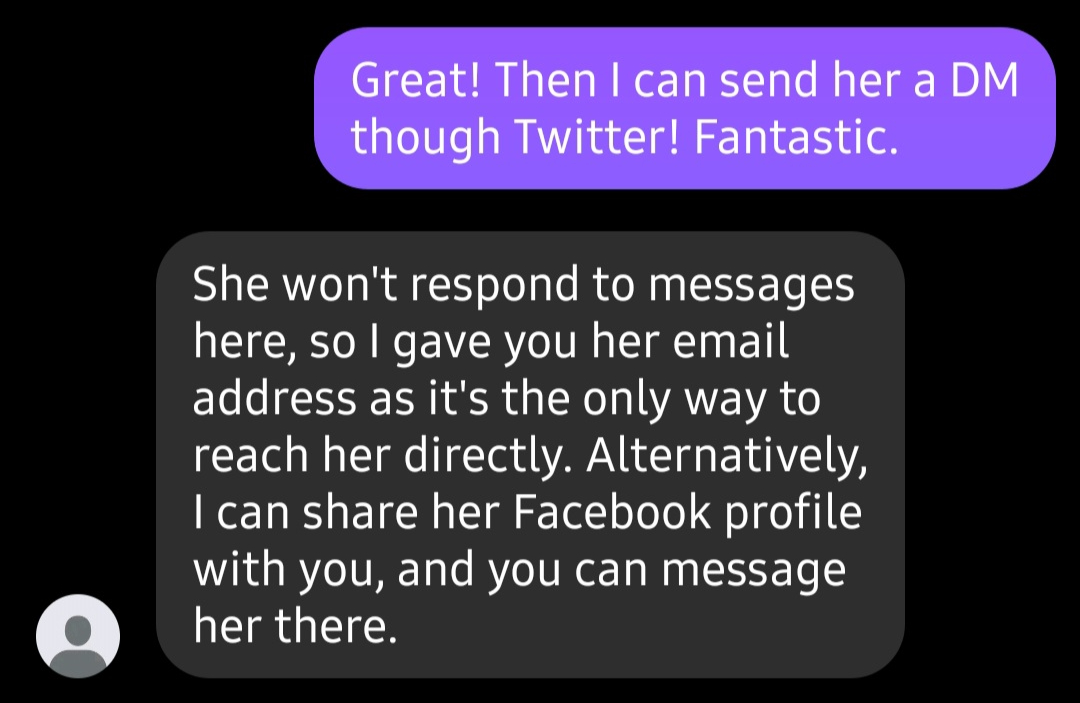
Example: Scammers insist on communicating their way. This author wisely asked about alternate communication methods. (Facebook scam)
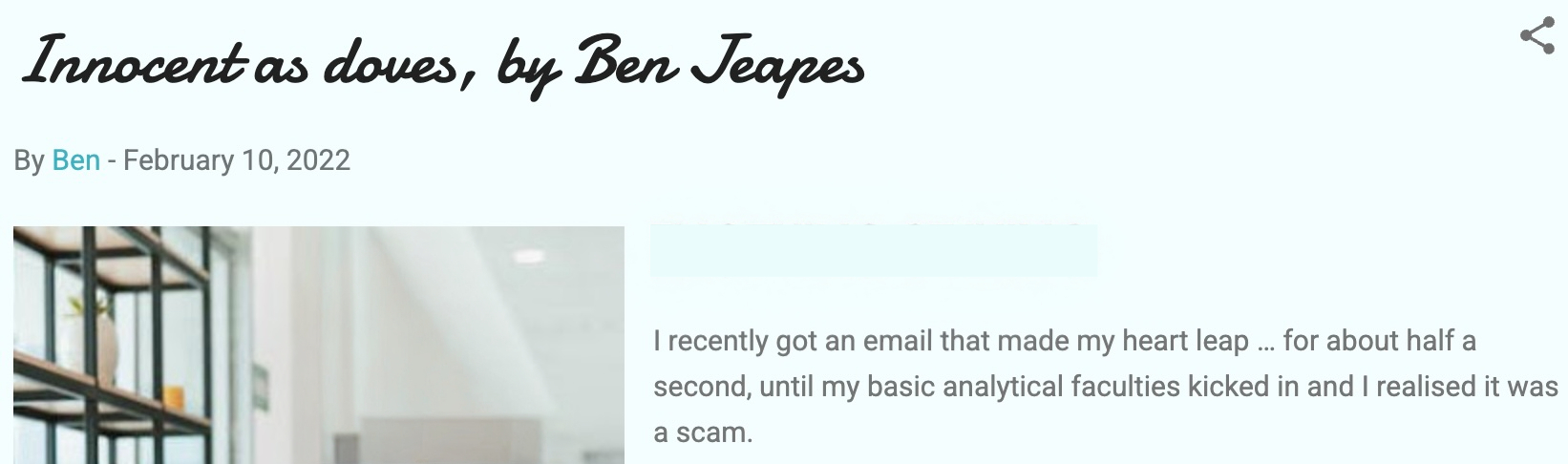
A personal account: another author who spread the word. (Blog post)
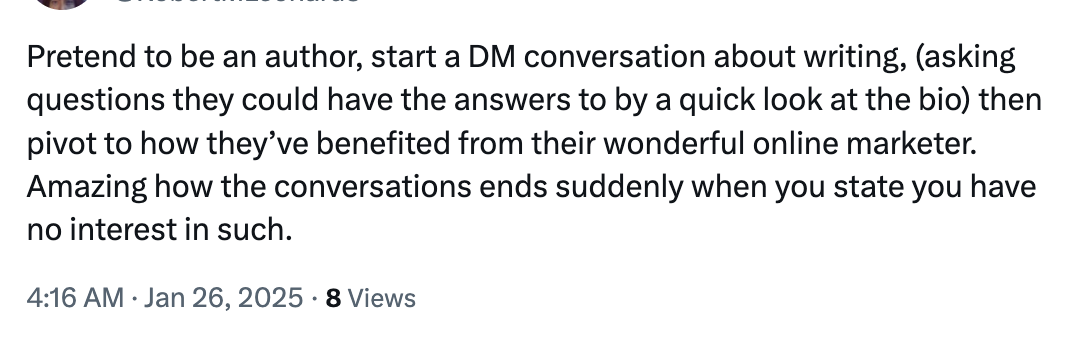
Author remarks: this is a standard story for how scams start. (From X)
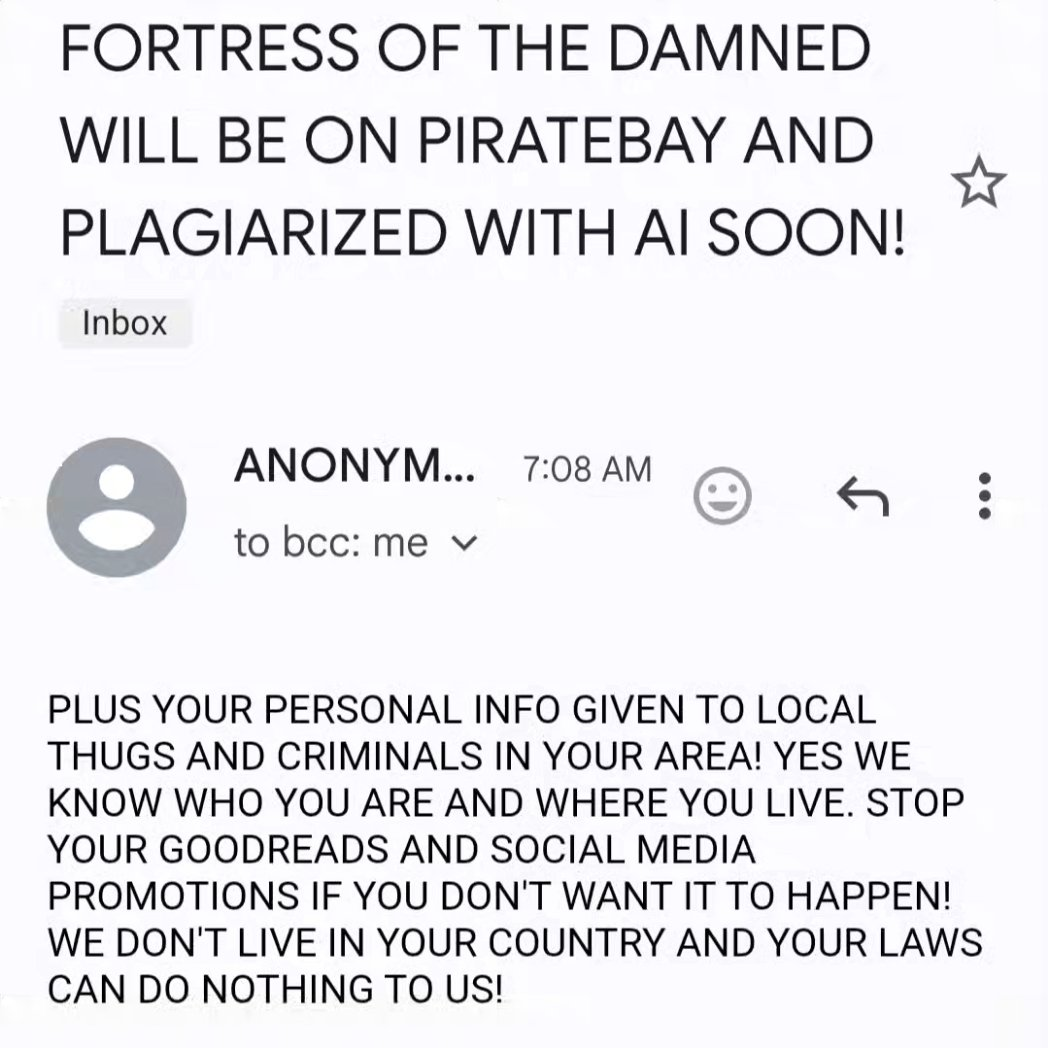
Physical violence? This one threatened physical violence. (@JRWhiteAuthor)
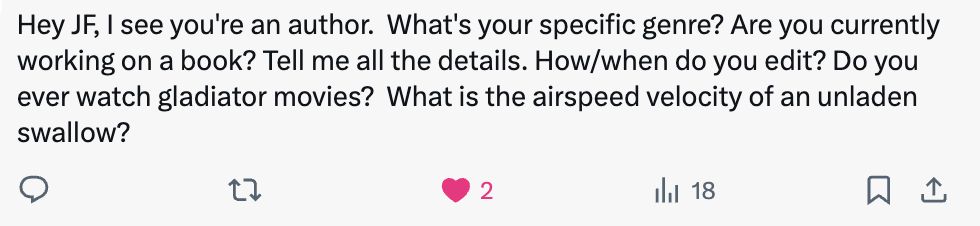
Stay positive: this author uses humor to cope. Sometimes, all you can do is laugh. (From X)
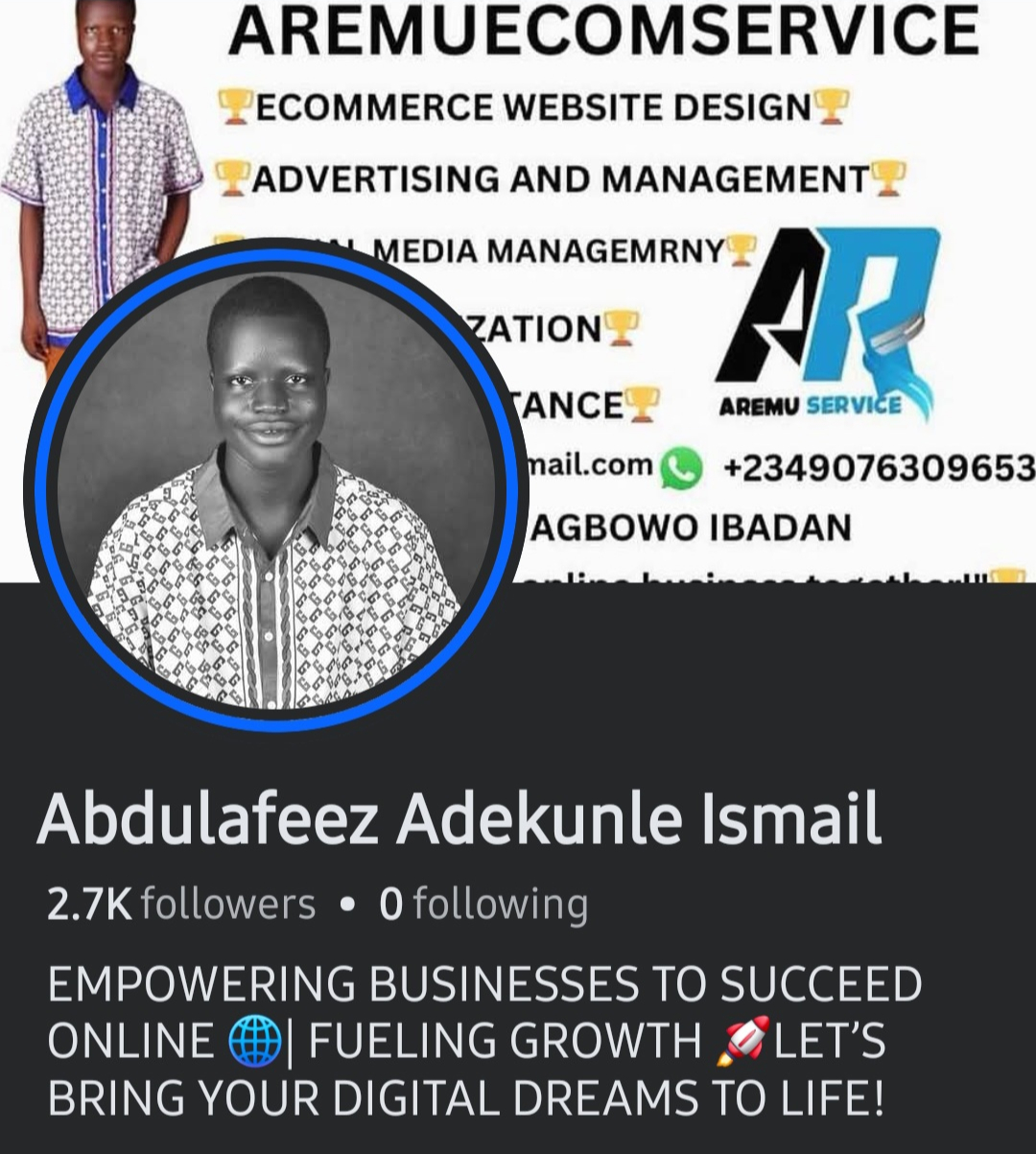
Changed profile: this profile pretended to be a famous female author to gain followers, then switched to providing a service. (Shared from Facebook)
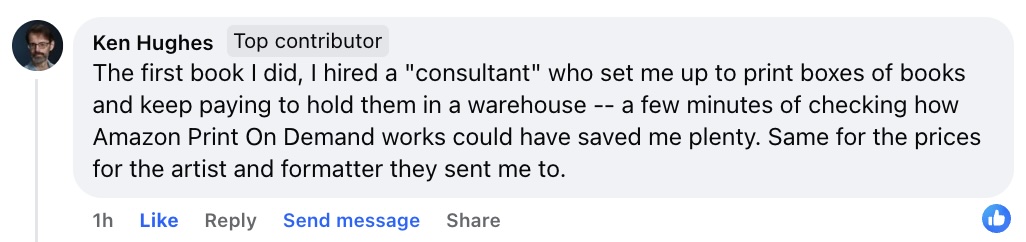
Piling on fees: a scammer took advantage of a new author, charging for unnecessary fees. (Ken Hughes on FB)
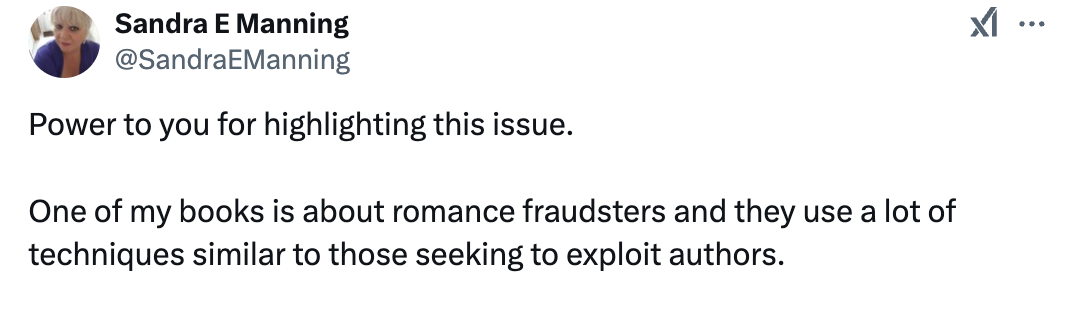
Standard scamming techniques: scammers use similar tactics to rob people in all aspects of life. (@SandraEManning)
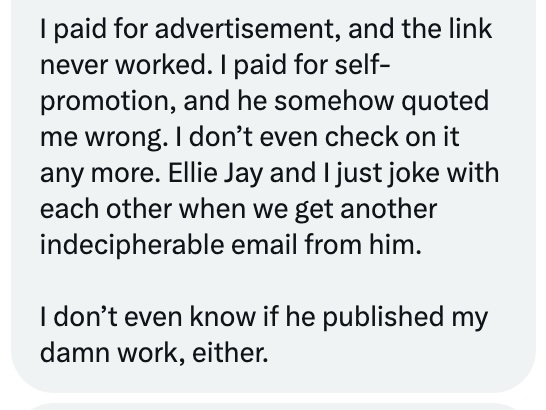
No follow through: no actual publication after paying for service. (X)

Author sentiment: I agree with this response. (@hatfield23686)

Get the finished product: don't pay/approve until you have the final result. (X)
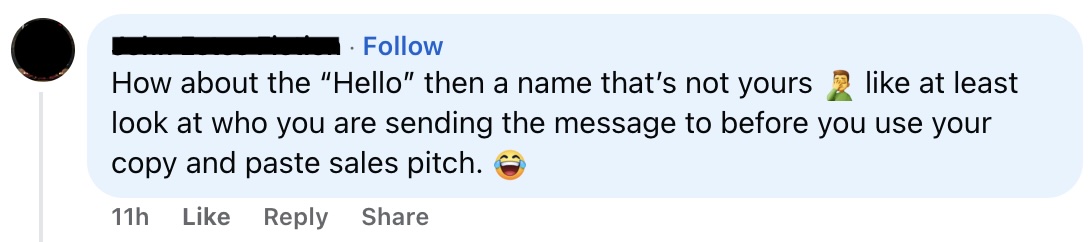
Stupid fakes: the ones who get your name wrong are easy to spot. (X)
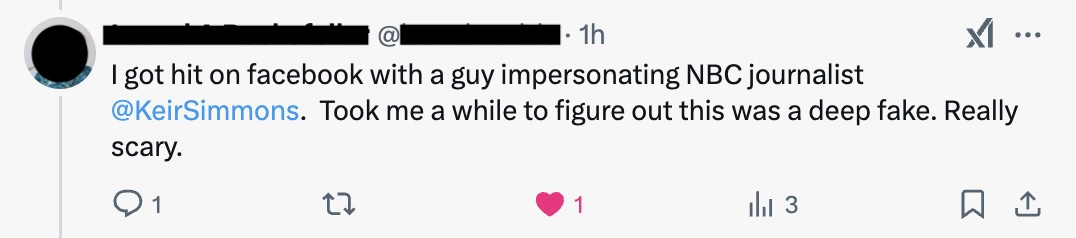
Deep fakes: beware of being contacted by famous/influential figures. (X)
PRE-MADE PLANS
Want a head start? These ready-made task lists turn this post into a checklist you can work through in Tasks:
Related posts



Newsletter
Get new posts in your inbox
Writing, publishing, and marketing tips for indie authors. No spam, unsubscribe anytime.
0 comments
- No comments yet. Be the first.